Calm Is the New Anti-Ageing: Your Vagus Nerve and The Art of Graceful Change


I have spent 30 years in spa and wellness, and I can tell you exactly when I stopped believing that ageing well came in a jar. It was the day I realised my medical results looked perfect, my calendar looked impressive, and I felt completely empty. My emotional tank was on zero. No serum fixes that.
What I was missing, and what so many women I meet are missing, is not another product or another goal. It is the ability to switch off. And the part of the body that controls that switch has a name most of us have never been taught: the vagus nerve.
Meet the nerve that tells your body it is safe
The vagus nerve is your body’s main “calm down” nerve. It runs from the brain, down through the neck, to the heart, lungs and gut. When it is working well, it slows your heart rate, helps you digest, and quietens inflammation.
Here is the part I find fascinating. Around 80% of its signals travel upwards, from the body to the brain. So your body is constantly telling your mind how safe it feels. That is why a slow breath can change your mood faster than a pep talk ever could.
Scientists measure how well it is working through heart rate variability (HRV), the tiny natural changes in timing between heartbeats. More variation is a good thing. It means your nervous system is flexible and bounces back from stress.
The ageing connection no one talks about
HRV naturally falls as we get older. By our sixties it is often around half what it was in our twenties. That matters, because lower HRV is one of the clearest markers linked to heart problems and how well we age overall.
There is also a quieter story underneath. A healthy vagus nerve helps switch off inflammation. When it weakens, low-level inflammation lingers in the body, something researchers now call inflammaging. It sits behind many of the changes we see on the outside and feel on the inside.
We cannot stop the clock. But we can stop living in a permanent state of alarm, and that changes how the clock treats us.
Why menopause makes this personal
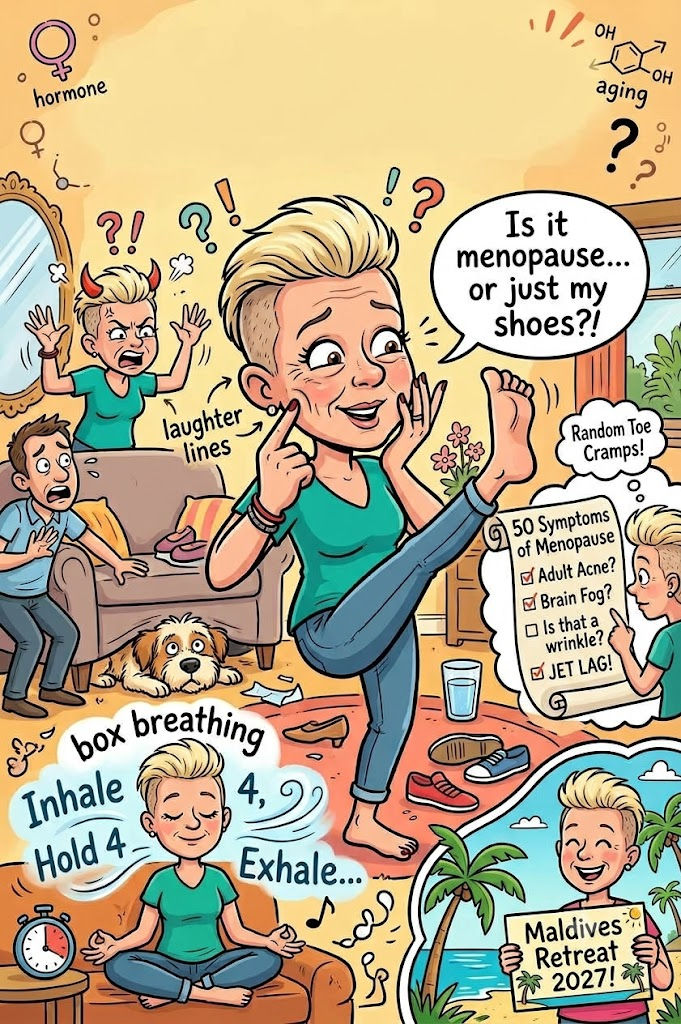
For women, this lands right in the middle of midlife. Vagal tone tends to drop through the menopause transition, alongside falling oestrogen. Many of us know the result without the science: broken sleep, a shorter fuse, anxiety that appears from nowhere, and a body that feels permanently “on”.
This is exactly why I created The Art of Graceful Change. Not to fight ageing, and certainly not to pretend it is not happening, but to give women of our age a roadmap our mothers never had and our daughter preparation so they don’t struggle like we are. Calming the nervous system sits at the heart of that roadmap.
Emotions: the body leads, the mind follows
People with lower vagal tone are more likely to struggle with anxiety, low mood and stress. The encouraging news is that it can be trained. A large review of studies found that slow, guided breathing practice noticeably reduced stress and anxiety.
It also works as a loop. Feeling calm strengthens the nerve, and a stronger nerve makes it easier to feel calm. Think of it as compound interest for your wellbeing.
Sleep: you cannot fall asleep in fight mode
To drift off, the body has to move from alert to calm, and the vagus nerve drives that shift. It is most active during deep sleep, which is when much of our repair happens.
If you lie awake at 3am with your mind racing, your body is very likely stuck in alert mode. And poor sleep weakens the nerve the following day, so the cycle feeds itself. Breaking that cycle is one of the kindest things you can do for your skin, your mood and your long-term health.
Six natural ways to look after your vagus nerve
None of these cost a fortune. Most cost nothing at all. Listed from best proven to still emerging:
Breathe slowly, with a long out-breath. Around six breaths a minute, for five to twenty minutes a day. This has the strongest evidence of anything here.
Move most days. Walking, swimming, Pilates, yoga. Regular movement is one of the best long-term builders of HRV.
Keep a sleep rhythm. Same bedtime, same wake time, even at weekends. Your nervous system loves a routine.
Splash cold water on your face. Fifteen to thirty seconds triggers a natural calming reflex. A short-term boost, but a useful one.
Make time for touch. Slow, gentle massage lifts vagal activity. I would say that, of course, but the research agrees.
Hum, sing and laugh with friends. The evidence here is lighter, but connection is never wasted, and humming in the car is cheaper than therapy.
A word of honesty
You will see plenty of “vagus nerve reset” hacks online promising instant transformation. Most quick tricks work for minutes, not months. Lasting change comes from small, boring, daily habits: breathing, moving, sleeping. Not glamorous, but it works.
If you are considering one of the ear-stimulation devices now on the market, the early research is promising, particularly for older adults. Please check with your doctor first if you have a heart condition or an implanted medical device.
Graceful, not frantic
Ageing naturally is not about doing more. For most women I know, it is about finally being allowed to do less, and doing it well. Fewer stimulants, fewer obligations, more breath, more sleep, more stillness.
That is the art of graceful change. It is Wellness for All, because your breath is free. And it is Wellness Your Way, because you choose where to start.
So tonight, before you reach for your phone, try this: breathe in for four, out for six, and do it ten times. Your vagus nerve will thank you. And your future self will too.
Join me in the Maldives, June 2027
If you want to go deeper, come and spend four nights with me at The Art of Graceful Change, our menopause retreat at OBLU XPERIENCE Ailafushi, just 15 minutes from Malé airport.
Calming the nervous system runs through every day of the programme: guided breathwork, Pilates, sleep rituals, sound healing and evening wind-downs, alongside a science-led epigenetic assessment, honest workshops on the medical side of menopause, nutrition, and spa therapies. Most importantly, you will be with women who understand exactly where you are. And the support carries on at home with monthly online meet-ups.
Places are limited, and this is the kind of week that changes how you live the next decade.
Enquire now: ele-na.com/menopause-retreat
This article is for general information and is not medical advice.


Comments